
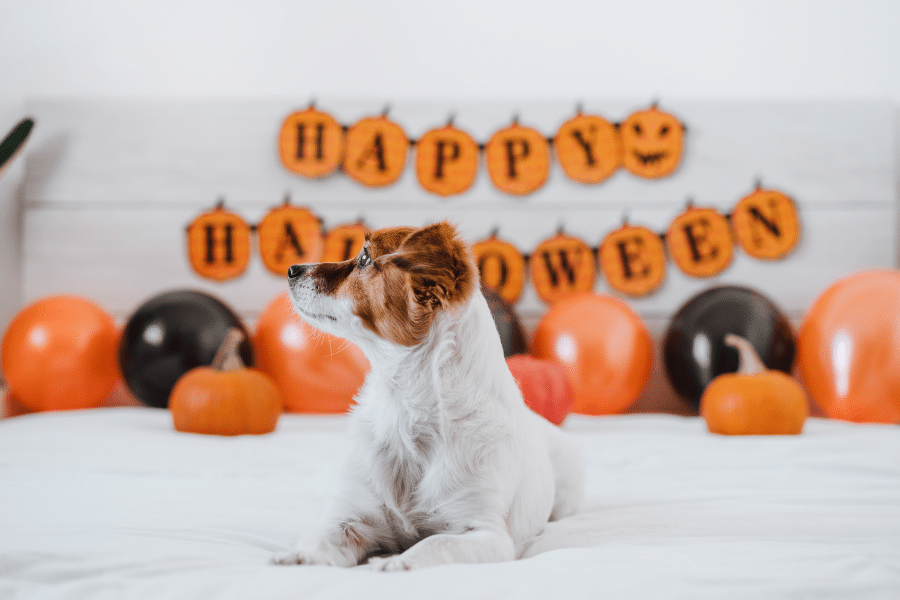
Halloween can make an ordinary evening feel completely different to your dog or cat. The doorbell keeps ringing. Children gather outside. People arrive wearing masks, hats, and costumes. Even familiar neighbors may look and sound strange.
For some pets, all that activity is simply interesting. For others, it can be frightening enough to trigger hiding, barking, pacing, trembling, or attempts to escape.
If your pet normally becomes nervous around strangers, planning ahead can make Halloween much easier. Knowing how to recognize fear and reduce common triggers can also help you decide when your pet needs veterinary support.
Why Are Some Pets Afraid of Halloween Visitors?
Dogs and cats rely heavily on familiar sights, sounds, smells, and routines. Halloween can change several of those things at once.
A person wearing a large costume or mask may not look like a normal visitor. Excited children can be louder than the guests your pet usually encounters. The repeated sound of knocking or the doorbell can also keep an already nervous animal on alert.
The ASPCA recommends keeping most dogs and cats in a separate, comfortable room away from the front door during busy trick-or-treating periods. Costumed strangers and frequent visitors can be stressful or frightening for pets.
Your pet’s reaction can also depend on previous experiences, personality, age, and general comfort around unfamiliar people.
How Can You Tell When Your Pet Is Frightened?
Fear does not look the same in every animal. Some pets become noisy and restless, while others become unusually quiet.
A frightened dog may:
- Bark repeatedly at visitors
- Pace around the house
- Tremble or shake
- Pant when the room is not hot
- Keep its tail tucked
- Pin its ears back
- Hide behind furniture or people
- Refuse treats
- Growl when approached
- Scratch or push at doors
- Try to escape
Cats may respond differently. A frightened cat might hide under furniture, flatten its ears, crouch, hiss, swat, avoid food, or refuse to come out until the house becomes quiet.
Do not force a frightened pet to interact with visitors. Fearful animals can become defensive when they feel trapped or threatened. Strangers, unusual clothing, crowds, and loud noises are recognized triggers for some dogs.
What Should You Do Before Trick-or-Treaters Arrive?
Preparation is easier than trying to calm an overwhelmed pet after Halloween activity begins.
Give Your Pet Some Exercise Earlier
If appropriate for your pet’s health and normal routine, take your dog for a walk or spend some time playing before visitors begin arriving.
Cats may enjoy an interactive play session with a familiar toy.
Physical activity will not eliminate fear, but meeting your pet’s normal exercise and enrichment needs before the evening begins may help them settle into their regular routine afterward.
Prepare a Quiet Room
Choose a room away from the front entrance. Set it up before the doorbell starts ringing.
Include familiar items such as:
- Your pet’s bed or blanket
- Fresh water
- Favorite toys
- A food puzzle or appropriate chew
- A litter box for cats
- Familiar bedding or other comforting items
Close curtains or blinds if your pet reacts to people walking past windows.
The room should feel like a normal, comfortable place rather than somewhere your pet is being punished.
Reduce the Doorbell Trigger
For some dogs, the doorbell itself causes the strongest reaction. You can ask trick-or-treaters to knock instead, if knocking is less upsetting. Another option is to sit outside to distribute candy so visitors do not need to repeatedly approach the door.
Keep your pet well away from the entrance either way.
What Should You Do If Your Pet Becomes Scared?
If your pet begins showing fear, your first goal is to reduce exposure to whatever is upsetting them. Move them to their prepared quiet space if they are not already there. Keep your own movements and voice relaxed.
Do not yell at a dog for barking or punish a cat for hiding. These behaviors may be responses to fear rather than deliberate misbehavior.
Give your pet space. Some animals want to stay near their owners, while others prefer to hide until the activity stops.
If your pet accepts treats, a familiar food puzzle or toy can provide something else to focus on. The ASPCA specifically suggests familiar toys and food puzzles as possible distractions for pets who become anxious around Halloween crowds and visitors.
Keep Your Pet Away From the Front Door
Even a pet that normally stays close to you can behave differently when frightened. Every time you open the front door, there is an opportunity for a scared dog or cat to run outside. Costumes, shouting children, flashing decorations, and groups of unfamiliar people can make an escaped pet even harder to approach.
Keep your pet behind a closed interior door or another secure barrier during trick-or-treating. Also check that your pet’s identification information is current. Halloween crowds and unusual costumes can frighten pets and increase the risk of bolting, making identification especially important.
Should Visitors Interact With a Nervous Pet?
Usually, a frightened pet should be allowed to create distance. Do not ask your pet to greet visitors simply because you want them to become accustomed to strangers. A Halloween gathering is not an ideal setting for introducing a nervous animal to many unfamiliar people at once.
Children should be especially careful around a frightened dog or cat. They may not recognize subtle signs that an animal wants to be left alone. If your dog stiffens, growls, backs away, hides, or repeatedly tries to leave, stop the interaction. Your pet does not need to participate in every part of Halloween to have a safe evening.
Should Your Frightened Pet Wear a Halloween Costume?
If your pet is already nervous, adding a costume may create another source of discomfort. Some pets tolerate clothing without a problem. Others dislike anything covering their head or body.
If your pet freezes, struggles, hides, repeatedly tries to remove the outfit, or otherwise seems distressed, take the costume off. The ASPCA advises against costumes for pets that do not enjoy them. Any pet costume should also allow normal movement, vision, breathing, and vocalization without loose pieces that could become choking hazards. A simple seasonal collar or bandana may be enough for a pet that dislikes a full costume.
Watch for Other Halloween Hazards
Fear is not the only concern when visitors are coming and going. Keep Halloween candy somewhere your pet cannot reach it. Chocolate can be dangerous for dogs and cats, while sugar-free products containing xylitol can be particularly dangerous for dogs.
Keep wrappers, costume accessories, electrical cords, glow products, and decorations away from curious pets as well. Candles and jack-o’-lanterns deserve extra attention. An excited or frightened pet can knock over a candle while running through the house.
Reducing these hazards is particularly important when your attention is divided between your pet, children, and visitors.
When Does Halloween Fear Need Veterinary Attention?
Being startled by the doorbell is different from experiencing intense or recurring fear.
Consider discussing your pet’s behavior with a veterinarian if they:
- Tremble or pant for prolonged periods
- Cannot settle after visitors leave
- Refuse food because of fear
- Become destructive while trying to escape
- Urinate or defecate because of severe distress
- Become unusually defensive
- Attempt to bite when frightened
- Injure themselves trying to hide or escape
- Show severe fear during other holidays or everyday events
Sudden behavioral changes also deserve attention. Pain and illness can sometimes affect how an animal responds to handling, noises, or unfamiliar people.
If you are searching for a veterinarian in Columbia because your pet regularly struggles with stressful situations, a veterinary examination can help determine whether there may be a medical concern contributing to the behavior.
Never give your pet human medication or use a sedative without veterinary guidance.
Plan Ahead If Halloween Is Difficult Every Year
If you already know your pet struggles with Halloween, do not wait until trick-or-treating starts to make a plan.
Speak with your veterinary team beforehand. Describe exactly what happens when your pet becomes frightened, how long the reaction lasts, and which situations trigger it.
Videos can sometimes help document behaviors that do not occur during an appointment. Record your pet only when it can be done safely and without deliberately exposing them to something frightening.
You can also begin preparing your home’s quiet area several days ahead of Halloween. Let your pet rest there during ordinary evenings so the space already feels familiar.
If you have recently moved to Columbia and are searching online for a vet near you, consider discussing seasonal anxiety and behavioral changes during your pet’s regular veterinary visits instead of waiting for a particularly stressful event.
A Calmer Halloween Starts With Preparation
Halloween does not have to involve your pet greeting every costumed visitor at the door. For many dogs and cats, spending the evening in a familiar room away from the activity is a much more comfortable choice.
Prepare before visitors arrive, reduce exposure to repeated triggers, secure doors and windows, and pay attention to your pet’s body language. If their fear seems severe, recurring, or suddenly different from their normal behavior, veterinary guidance can help you determine the appropriate next step.
Need Help With Your Pet’s Health or Behavior in Columbia?
Garners Ferry Animal Hospital provides veterinary care for dogs and cats in Columbia, SC, including wellness exams, sick pet exams, hospitalization, diagnostic services, and other medical care. The hospital is open Monday through Friday from 8:00 a.m. to 5:00 p.m.
Call (803) 776-4554 during regular business hours if your pet needs veterinary attention or you have concerns about a sudden change in their health or behavior.
Frequently Asked Questions
1. Why is my dog suddenly afraid of people wearing Halloween costumes?
Ans: Costumes can change a person’s normal appearance, shape, movement, and facial visibility. Masks and large accessories may be especially unfamiliar. Give your dog distance rather than forcing an interaction with a costumed visitor.
2. Should I comfort my pet when they are frightened?
Ans: You can remain calmly available to your pet. Let them decide whether they want to stay near you or retreat to a quiet area. Avoid forcing physical contact if they are trying to hide.
3. What should I do if my pet becomes extremely frightened on Halloween in Columbia?
Ans: Move your pet to a secure, quiet location and remove as many triggers as possible. If the behavior is severe, persists after the activity ends, or you are concerned about your pet’s health, contact Garners Ferry Animal Hospital during regular business hours for veterinary guidance. The practice is open Monday through Friday from 8:00 a.m. to 5:00 p.m.
4. Can Garners Ferry Animal Hospital help if my pet’s behavior suddenly changes?
Ans: Yes. Sudden behavioral changes can sometimes accompany pain, illness, or another medical problem. Garners Ferry Animal Hospital offers sick pet exams, diagnostic services, hospitalization, and other medical services for dogs and cats in Columbia. A veterinary examination can help determine whether a medical concern may be contributing to the change.
5. What should I do if my dog growls at trick-or-treaters?
Ans: Do not punish the growling or force your dog closer to visitors. Move your dog to a secure area where they will not need to interact with trick-or-treaters. Growling can indicate that a dog is uncomfortable and wants more distance.
6. Who should I call in Columbia if my frightened pet gets hurt while trying to escape?
Ans: During regular weekday hours, contact Garners Ferry Animal Hospital at (803) 776-4554 for guidance. If an emergency occurs after hours or on a weekend, visit our website for further assistance.